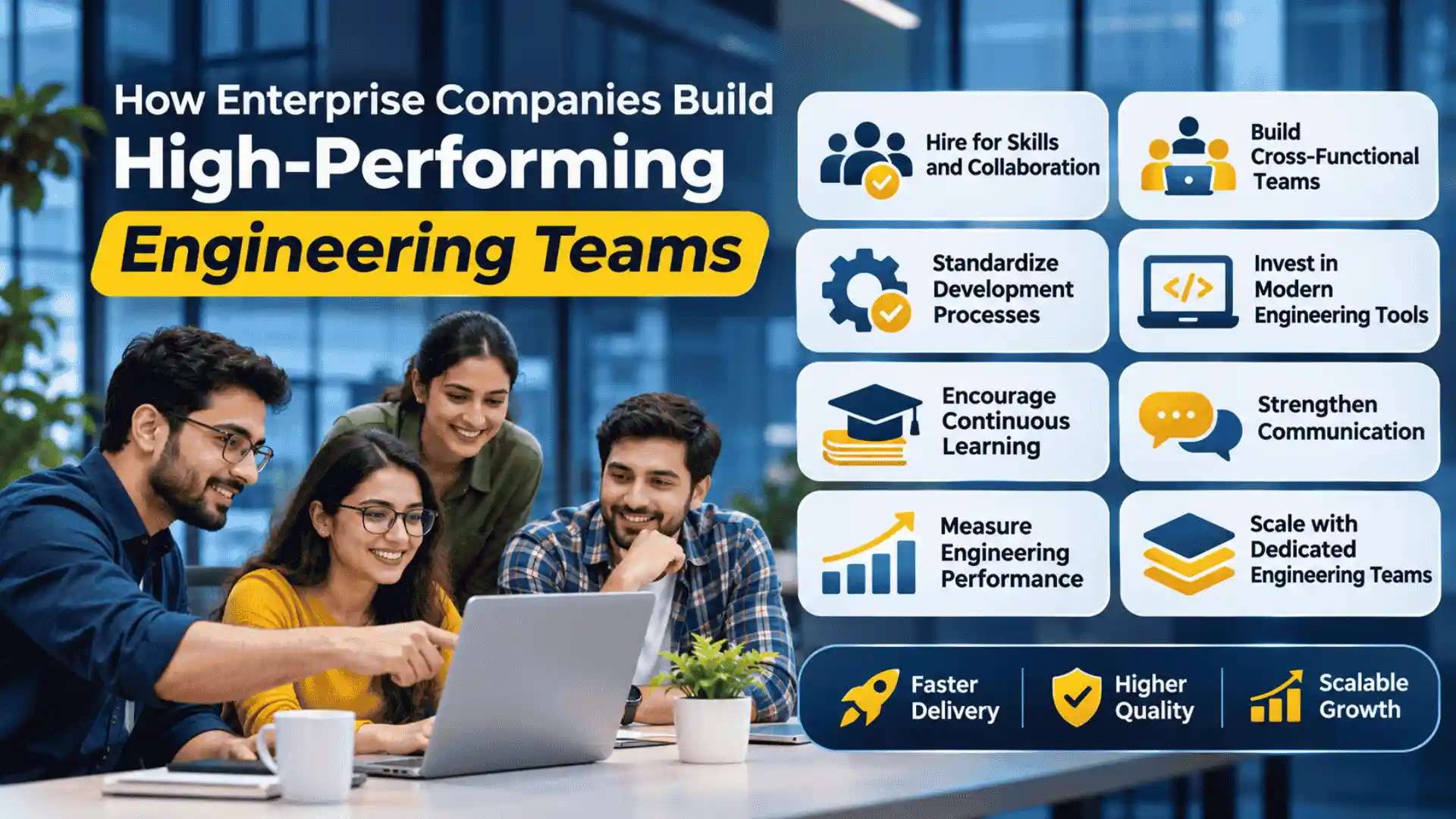
How CTOs Scale Engineering Teams Without Increasing Costs
Scaling engineering teams doesn't always require hiring more developers. Learn how CTOs improve productivity through automation, cross-functional teams, dedicated engineering resources, and smarter development processes. Discover practical strategies to reduce costs, increase delivery speed, and build scalable engineering organizations that support long-term business growth.
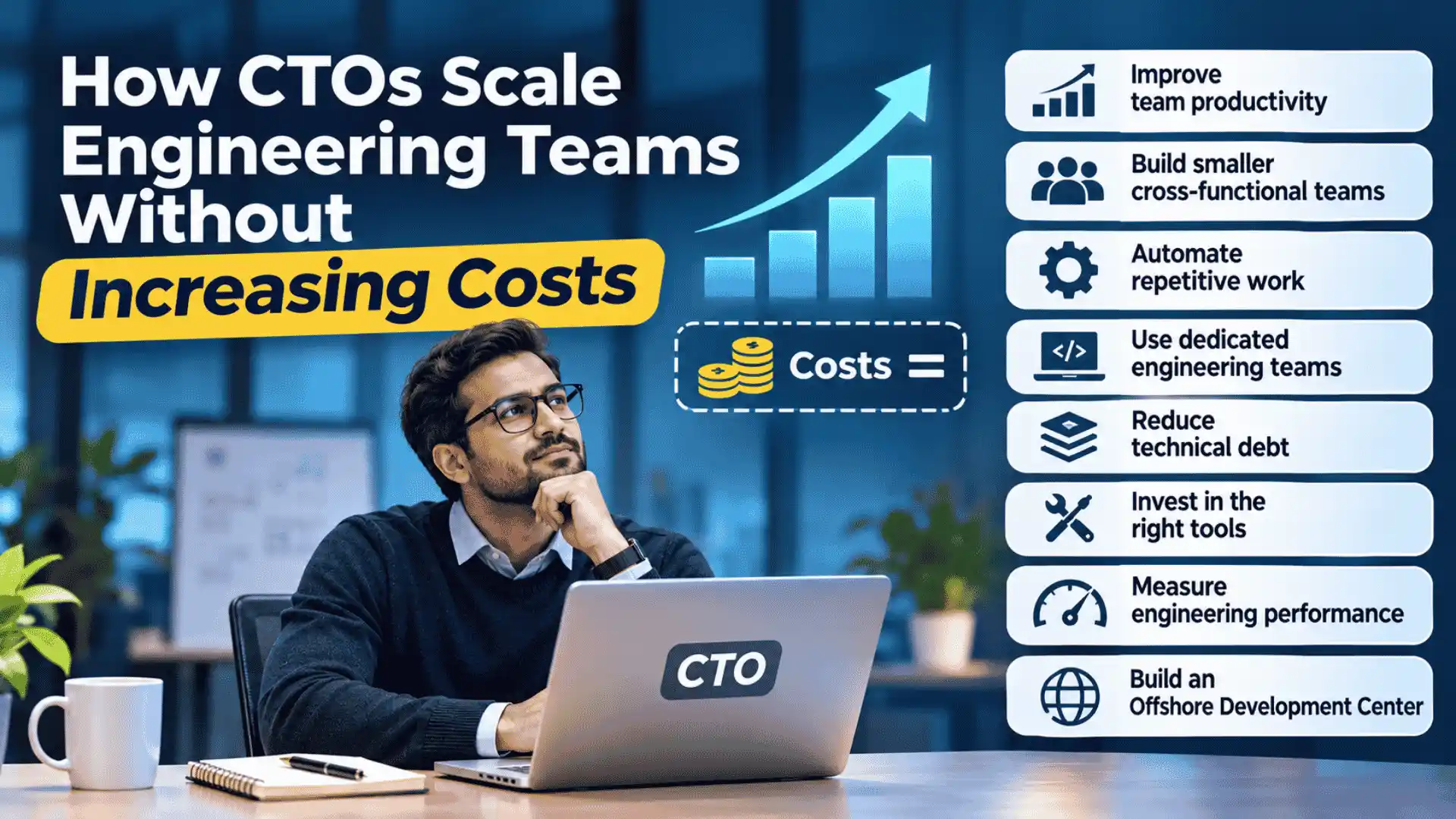
Scaling an engineering team doesn't always mean hiring more developers. Many CTOs improve delivery by optimizing processes, using the right team structure, and adopting smarter development practices. By focusing on productivity instead of headcount, enterprises can deliver software faster while controlling costs.
Why is engineering team scaling a challenge?
As businesses grow, software projects become larger and more complex.
Many CTOs face challenges such as:
- Limited hiring budgets
- Longer recruitment cycles
- Skill shortages
- Growing project backlogs
- Increased maintenance work
- Higher operational costs
Simply adding more developers often creates additional management overhead without improving delivery speed.
1. Improve engineering productivity first
Before hiring new developers, evaluate how existing teams work.
Look for opportunities to:
- Remove repetitive tasks
- Improve collaboration
- Standardize development processes
- Automate testing
- Simplify deployments
Increasing productivity often delivers better results than expanding the team.
2. Build smaller cross-functional teams
Large engineering departments can become difficult to manage.
Many successful CTOs organize engineers into smaller teams that include:
- Software Developers
- QA Engineers
- DevOps Engineers
- Product Managers
- Business Analysts
Smaller teams improve communication, ownership, and delivery speed.
3. Automate repetitive work
Engineering teams lose valuable time performing manual tasks.
Automation can improve:
- Software testing
- Code deployment
- Infrastructure provisioning
- Monitoring
- Reporting
- Build pipelines
Automation reduces errors while allowing engineers to focus on product development.
4. Scale with dedicated engineering teams
Instead of hiring permanent employees for every project, many enterprises expand using flexible delivery models.
This approach provides:
- Faster onboarding
- Access to specialized skills
- Lower recruitment costs
- Flexible scaling
- Improved delivery capacity
Organizations often use Dedicated Development Teams or Staff Augmentation to support internal engineering teams without increasing fixed staffing costs.
5. Reduce technical debt
Technical debt slows development and increases maintenance costs.
CTOs should regularly invest time in:
- Refactoring outdated code
- Removing unused features
- Improving documentation
- Updating dependencies
- Fixing recurring issues
Reducing technical debt allows engineering teams to deliver new features faster.
6. Invest in modern development tools
The right tools help engineers spend more time building products instead of managing manual processes.
Common investments include:
- Source control platforms
- CI/CD pipelines
- Project management tools
- Cloud infrastructure
- Monitoring solutions
- Collaboration platforms
Modern development tools improve productivity without increasing team size.
7. Measure engineering performance
Scaling successfully requires visibility into team performance.
Useful metrics include:
- Deployment frequency
- Lead time for changes
- Sprint velocity
- Bug resolution time
- Production incidents
- Code quality
- Customer satisfaction
Tracking these metrics helps identify bottlenecks and improve delivery.
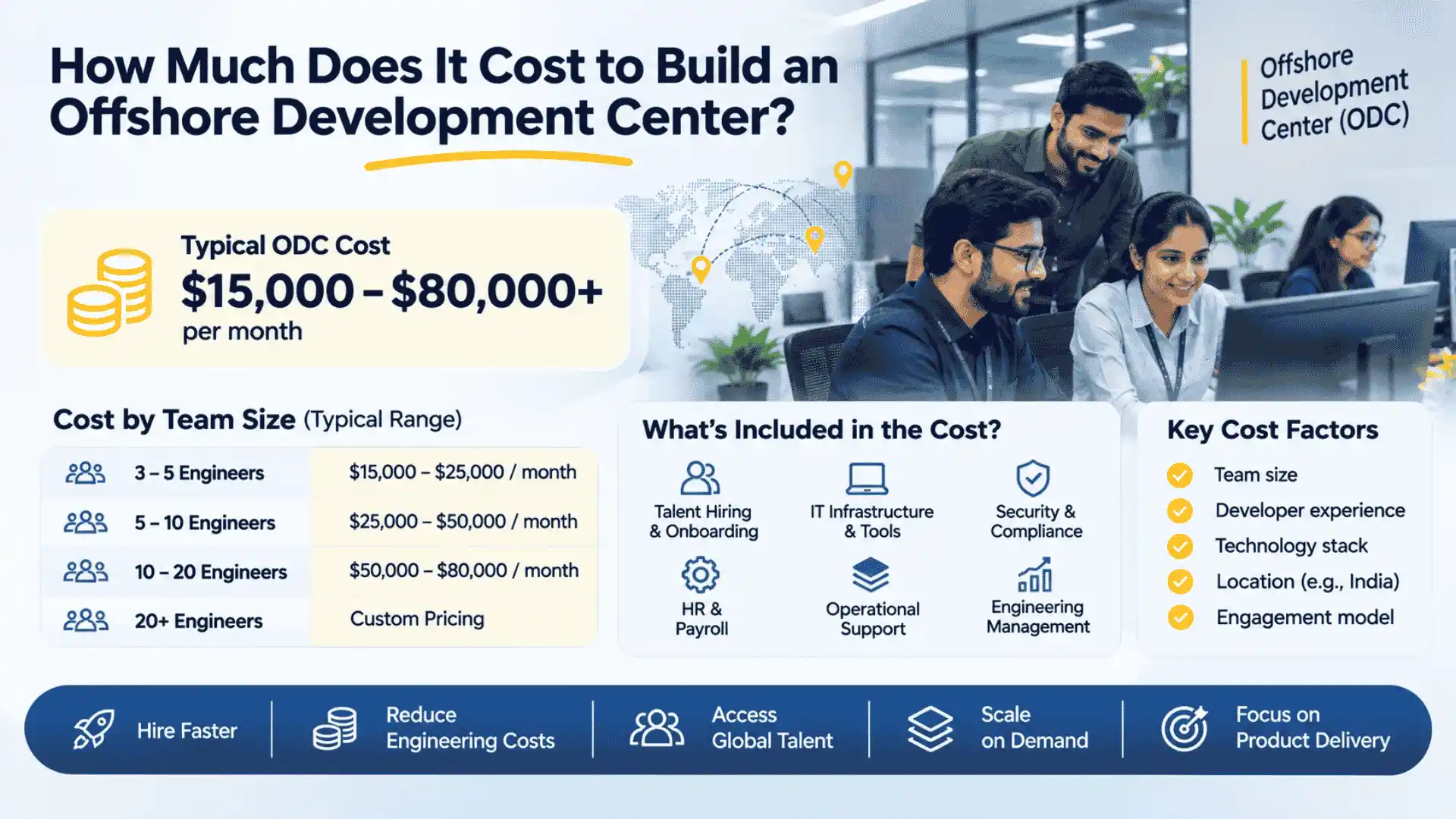
8. Build an Offshore Development Center
For long-term growth, many CTOs establish an Offshore Development Center (ODC).
An ODC provides:
- Access to skilled engineers
- Lower operating costs
- Faster team expansion
- Dedicated delivery teams
- Long-term scalability
Organizations can build an Offshore Development Center while maintaining complete control over engineering processes.
Best practices for scaling engineering teams
CTOs can improve results by following these best practices:
- Focus on productivity before hiring.
- Build small, cross-functional teams.
- Automate repetitive engineering tasks.
- Standardize development processes.
- Measure engineering performance.
- Invest in continuous learning.
- Scale gradually based on business demand.
A balanced approach helps organizations grow efficiently without unnecessary costs.
How TeamBees helps engineering leaders
TeamBees helps CTOs scale engineering teams with flexible delivery models and experienced technical professionals.
Our expertise includes:
- Dedicated Development Teams
- Staff Augmentation
- Offshore Development Center
- Software Development Services
- Cloud Engineers
- DevOps Engineers
- QA Automation Engineers
We help enterprises expand engineering capacity while maintaining quality, speed, and cost efficiency.
Frequently Asked Questions
How can CTOs scale engineering teams without hiring more developers?
CTOs can scale engineering teams by improving productivity, automating repetitive work, optimizing development processes, and using flexible delivery models such as dedicated development teams and staff augmentation.
What is the most cost-effective way to scale an engineering team?
Many enterprises reduce costs by combining their internal engineering team with:
- Dedicated Development Teams
- Staff Augmentation
- Offshore Development Centers (ODCs)
This approach provides access to experienced engineers without the long-term costs of permanent hiring.
Why do engineering costs increase as teams grow?
Engineering costs often rise because of:
- Longer hiring cycles
- Increased management overhead
- Communication challenges
- Technical debt
- Manual development processes
- Inefficient workflows
Improving engineering efficiency often delivers better results than simply increasing headcount.
What metrics should CTOs monitor?
Important engineering metrics include:
- Deployment frequency
- Lead time for changes
- Sprint velocity
- Production incidents
- Code quality
- Bug resolution time
- Team productivity
Monitoring these metrics helps engineering leaders identify opportunities for improvement.
When should companies build an Offshore Development Center?
An Offshore Development Center (ODC) is a good option when organizations need to:
- Scale engineering capacity
- Access specialized talent
- Reduce development costs
- Support long-term projects
- Expand global delivery
An ODC offers dedicated resources while giving enterprises full control over development.
Common scaling mistakes
Many engineering organizations grow slower because of avoidable mistakes.
Common examples include:
- Hiring too quickly without a scaling strategy
- Building large teams instead of efficient teams
- Ignoring automation
- Delaying technical debt reduction
- Poor communication between teams
- Not measuring engineering performance
- Using outdated development processes
Avoiding these mistakes helps engineering teams scale more effectively.
Why choose TeamBees?
TeamBees helps CTOs build scalable engineering organizations that deliver software faster while controlling costs.
Our expertise includes:
- Dedicated Development Teams
- Staff Augmentation
- Offshore Development Center
- Software Development Services
- Cloud Engineers
- DevOps Engineers
- QA Automation Engineers
- Data Engineers
Whether you need to expand an existing engineering team or build a dedicated delivery center, TeamBees provides the talent and expertise to help you scale efficiently.
Final thoughts
Scaling an engineering team does not always require hiring more people. The most successful CTOs improve delivery by optimizing processes, automating repetitive work, investing in the right tools, and using flexible staffing models.
By focusing on productivity, collaboration, and continuous improvement, enterprises can grow engineering capacity while keeping costs under control and delivering better business outcomes.
Related articles
- How Enterprise Companies Build High-Performing Engineering Teams
- Enterprise AI Implementation Checklist Before You Start
- Why AI Projects Fail After the Proof of Concept Stage
- AI Integration Challenges Every Enterprise Should Know
- Dedicated Team vs Outsourcing: Which Delivery Model Fits Your Business?