How Enterprise Companies Build High-Performing Engineering Teams
High-performing engineering teams are built through skilled talent, clear processes, collaboration, automation, and continuous improvement. Learn how enterprise companies scale engineering teams, improve software quality, increase productivity, and deliver projects faster with proven strategies and dedicated development teams.
Building a high-performing engineering team is about more than hiring talented developers. Enterprise companies focus on team structure, clear processes, strong leadership, and continuous improvement to deliver software faster without sacrificing quality. The right engineering strategy helps organizations scale efficiently while supporting long-term business growth.
What makes an engineering team high performing?
High-performing engineering teams consistently deliver reliable software, collaborate effectively, and adapt quickly to changing business needs.
These teams typically have:
- Clear ownership
- Strong technical leadership
- Skilled engineers
- Efficient development processes
- Modern development tools
- Continuous learning
Rather than simply increasing headcount, successful enterprises invest in building teams that work well together.
Why do enterprises focus on engineering excellence?
Enterprise software projects are often complex and involve multiple teams, products, and stakeholders.
High-performing engineering teams help organizations:
- Deliver projects faster
- Improve software quality
- Reduce technical debt
- Increase developer productivity
- Support business growth
- Respond quickly to changing customer needs
Companies that build strong engineering teams gain a competitive advantage.
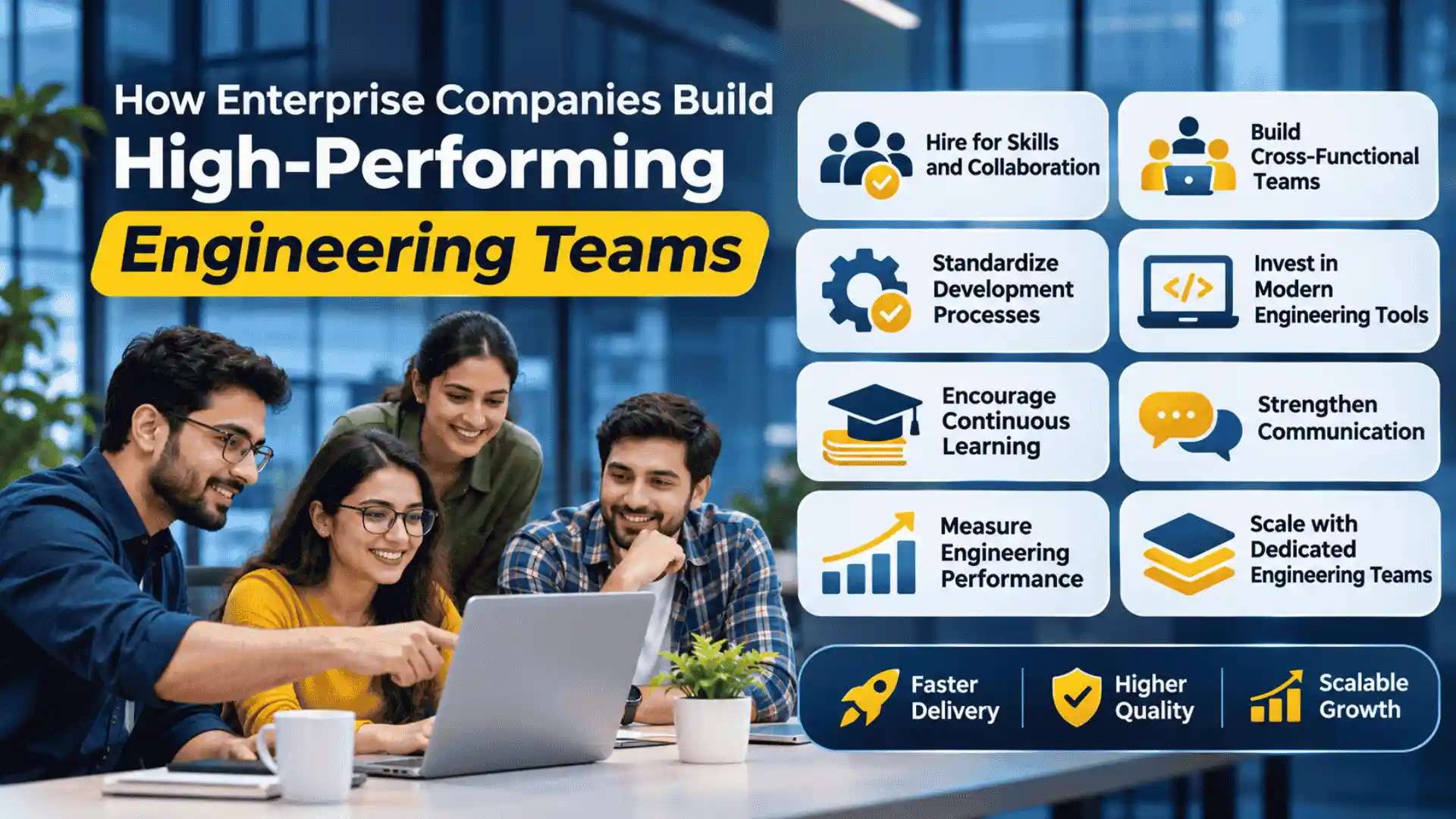
1. Hire for skills and collaboration
Technical skills are important, but collaboration is equally valuable.
Successful enterprises look for engineers who can:
- Solve complex problems
- Communicate effectively
- Share knowledge
- Work across teams
- Adapt to changing technologies
Building the right team culture starts with hiring the right people.
2. Build cross-functional teams
Many enterprise companies organize engineers into small, cross-functional teams.
These teams may include:
- Software Developers
- QA Engineers
- DevOps Engineers
- Product Managers
- UI/UX Designers
- Business Analysts
Cross-functional teams reduce bottlenecks and improve delivery speed.
Organizations can also expand delivery capacity through Dedicated Development Teams when additional expertise is needed.
3. Standardize development processes
Consistent processes help engineering teams deliver software more efficiently.
Best practices include:
- Agile development
- Code reviews
- Automated testing
- CI/CD pipelines
- Documentation
- Sprint planning
Standardization improves software quality while reducing development risks.
4. Invest in modern engineering tools
Enterprise teams rely on tools that improve collaboration and productivity.
Common investments include:
- Source control platforms
- CI/CD pipelines
- Project management tools
- Monitoring solutions
- Cloud infrastructure
- Development environments
The right tools allow engineers to focus more on building products and less on manual tasks.
5. Encourage continuous learning
Technology changes quickly, and successful engineering teams keep learning.
Enterprise companies support engineers through:
- Technical workshops
- Certifications
- Knowledge-sharing sessions
- Internal documentation
- Code reviews
- Mentorship programs
Continuous learning helps teams stay productive and adopt new technologies with confidence.
6. Strengthen communication
Engineering teams often work across different departments and time zones.
Clear communication helps reduce delays and misunderstandings.
Best practices include:
- Daily stand-up meetings
- Sprint planning
- Retrospectives
- Technical documentation
- Shared project dashboards
- Regular stakeholder updates
Good communication keeps projects moving forward.
7. Measure engineering performance
High-performing teams track meaningful metrics instead of focusing only on development speed.
Common metrics include:
- Deployment frequency
- Lead time for changes
- Production incidents
- Bug resolution time
- Sprint completion rate
- Code quality
- Customer satisfaction
These insights help teams identify areas for improvement.
8. Scale with dedicated engineering teams
Hiring full-time employees for every project is not always the fastest or most cost-effective option.
Many enterprises expand their engineering capacity through Dedicated Development Teams or Staff Augmentation.
This approach helps organizations:
- Access specialized skills
- Scale projects quickly
- Reduce hiring time
- Improve delivery speed
- Maintain flexibility
For larger initiatives, an Offshore Development Center can provide long-term engineering support.
How TeamBees helps enterprise engineering teams
TeamBees helps enterprises build and scale high-performing engineering teams for software development, cloud projects, quality assurance, and enterprise platforms.
Our expertise includes:
- Dedicated Development Teams
- Staff Augmentation
- Offshore Development Center
- Software Development Services
- Cloud Engineers
- DevOps Engineers
- QA Automation Engineers
Frequently Asked Questions
What is a high-performing engineering team?
A high-performing engineering team consistently delivers high-quality software, collaborates effectively, solves problems quickly, and adapts to changing business requirements while maintaining reliable development practices.
How do enterprise companies build engineering teams?
Most enterprises build engineering teams by:
- Hiring experienced engineers
- Creating cross-functional teams
- Standardizing development processes
- Investing in automation
- Encouraging continuous learning
- Measuring engineering performance
The focus is on improving collaboration as well as technical skills.
What roles should an enterprise engineering team include?
A typical engineering team may include:
- Software Developers
- QA Automation Engineers
- DevOps Engineers
- Cloud Engineers
- UI/UX Designers
- Business Analysts
- Product Managers
- Data Engineers
- Engineering Managers
The exact structure depends on the project's size and complexity.
Should enterprises hire or scale with dedicated teams?
It depends on business goals.
For long-term projects, many enterprises combine their internal teams with Dedicated Development Teams or Staff Augmentation to access specialized skills without slowing delivery.
How do engineering teams improve software quality?
Software quality improves when teams follow consistent engineering practices such as:
- Code reviews
- Automated testing
- Continuous Integration and Continuous Delivery (CI/CD)
- Monitoring
- Documentation
- Regular feedback
These practices reduce defects and improve delivery reliability.
Common mistakes enterprises make
Many engineering teams struggle because of avoidable mistakes.
Common examples include:
- Hiring too quickly without a clear plan
- Building large teams instead of efficient teams
- Poor communication between departments
- Ignoring technical debt
- Lack of documentation
- Limited automation
- Delaying testing until the end of development
- Measuring only development speed instead of business outcomes
Avoiding these issues helps teams deliver software more consistently.
Why choose TeamBees?
TeamBees helps enterprises build scalable engineering teams that deliver software efficiently and support long-term business growth.
Our services include:
- Staff Augmentation
- Dedicated Development Teams
- Offshore Development Center
- Software Development
- Cloud Engineers
- DevOps Engineers
- QA Automation Engineers
- Data Engineers
- Machine Learning Engineers
Whether you need to expand an existing team or build a new engineering capability, we provide experienced professionals who integrate seamlessly with your business.
Final thoughts
High-performing engineering teams are built through strong leadership, clear processes, skilled professionals, and continuous improvement. Enterprise companies focus on collaboration, automation, and scalability instead of simply increasing team size.
By combining experienced internal teams with the right technology partner, organizations can deliver software faster, improve quality, and respond more effectively to changing business needs.
Related articles
- How Much Does It Cost to Build an Offshore Development Center?
- Dedicated Team vs Outsourcing: Which Delivery Model Fits Your Business?
- Staff Augmentation vs Managed Services: Which is Better for Enterprises?
- Why Hiring More Developers Isn't Always the Fastest Way to Scale Software Teams
- How to Reduce Software Development Costs Without Hiring More Developers