AI Tools Are Everywhere, But Nobody Uses Them. Here's Why
AI tools are everywhere, but low employee adoption prevents real business value. Learn why AI initiatives fail and how enterprises can improve adoption, productivity, and ROI.
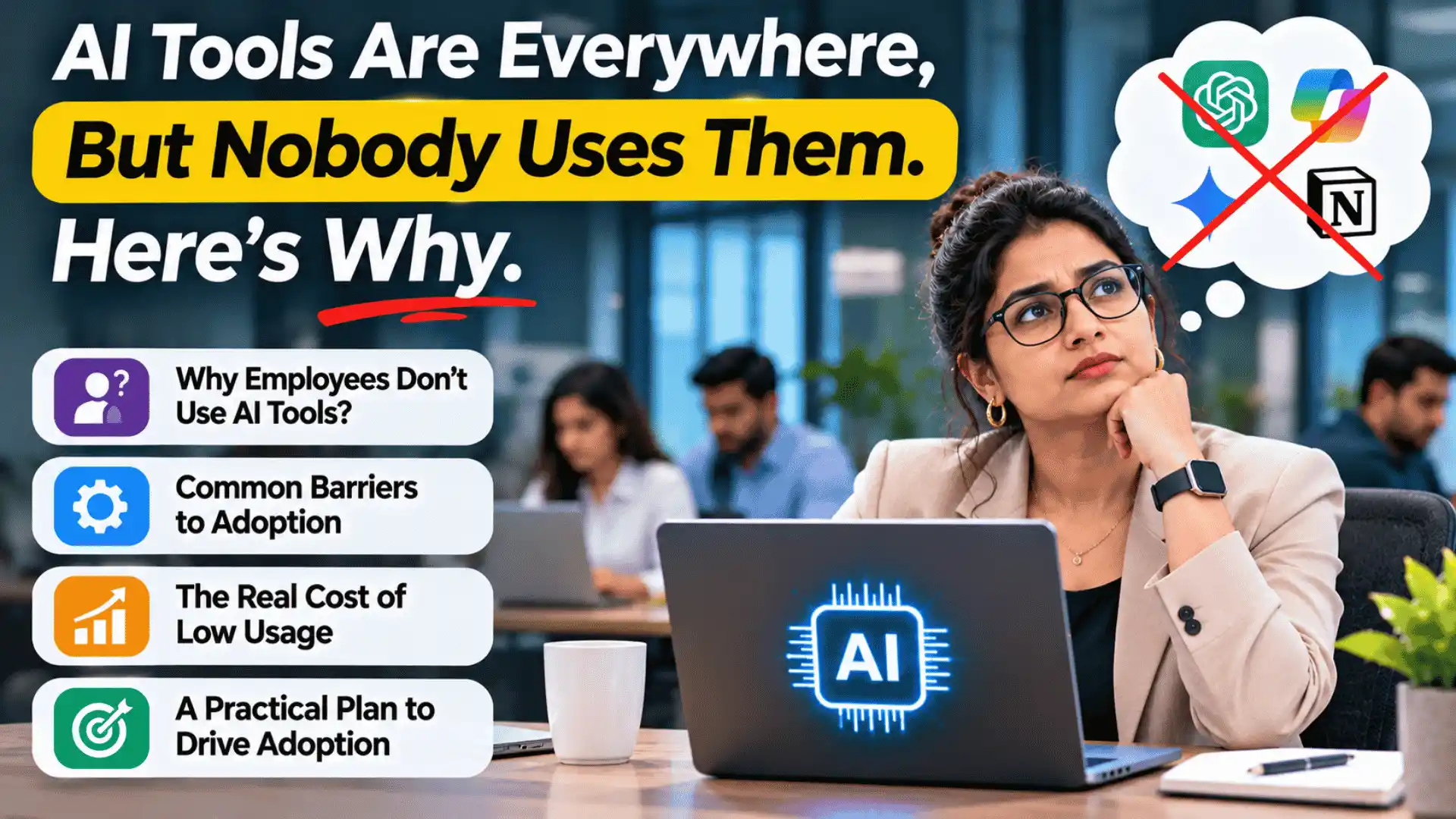
Every Company Has AI. Very Few Companies actually Use It
Walk into almost any enterprise today and you'll hear the same story.
"We've invested in AI."
But ask another question:
"How many employees actually use those AI tools every day?"
The answer is often disappointing.
Many organizations spend thousands or even millions on AI software, copilots, chatbots, and automation platforms, only to discover that employees continue using spreadsheets, email chains, manual approvals, and outdated workflows.
The problem isn't that AI doesn't work.
The problem is that people don't use it.
Recent research shows that AI adoption is growing rapidly, yet most organizations still struggle to scale AI across the enterprise and realize meaningful business value.
The Real Cost of Low AI Adoption
When employees ignore AI tools, businesses don't just lose software licenses.
They lose:
- Productivity
- Faster decision making
- Operational efficiency
- Competitive advantage
- ROI from AI investments
Instead of transforming the business, AI becomes another expensive subscription.
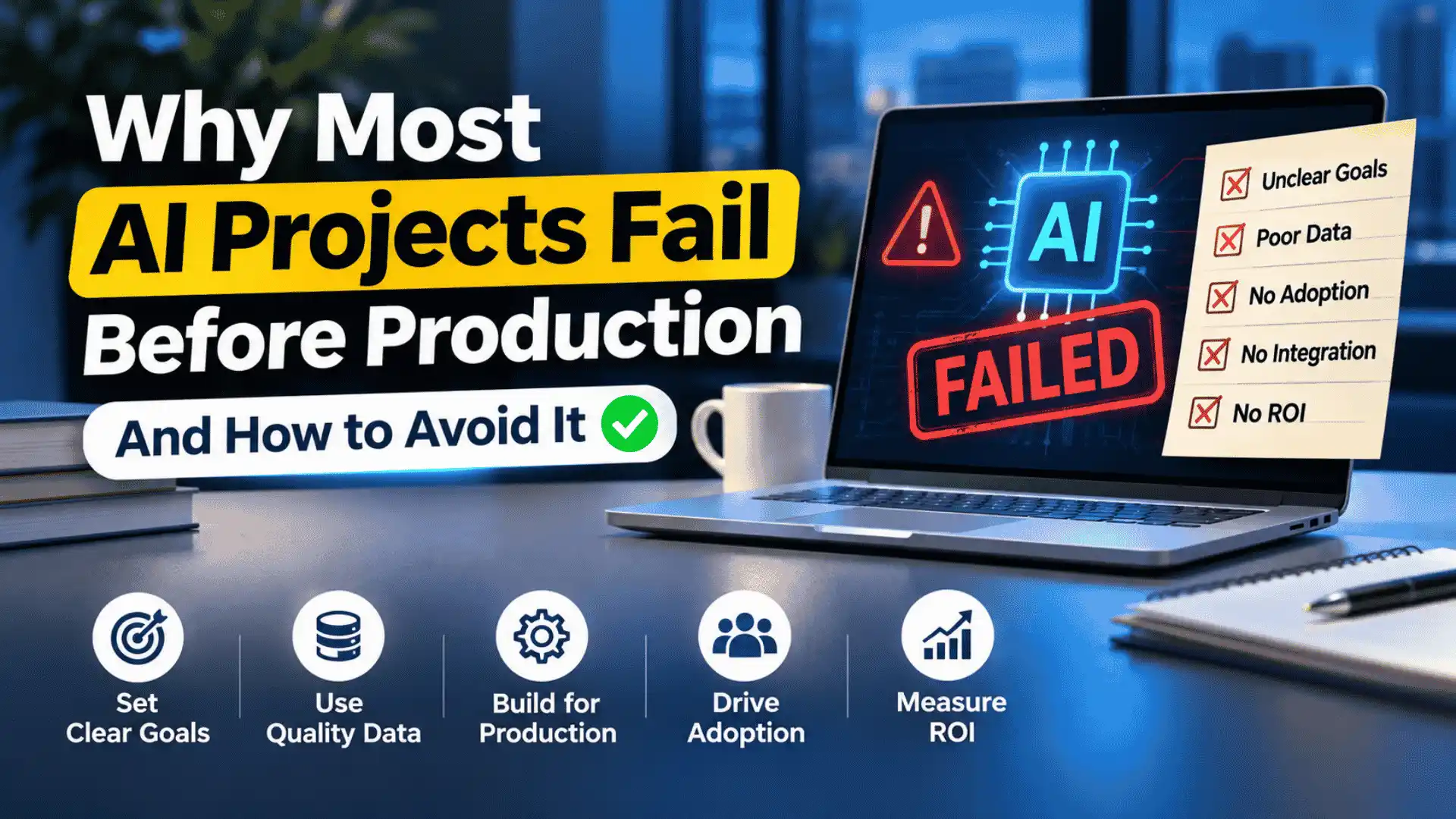
That is one of the biggest reasons enterprise AI initiatives fail.
Why Employees Don't Use AI Tools
1. Nobody Explained Why They Should Use Them
Most organizations introduce AI like this:
"Here's your new AI assistant."
That's not enough.
Employees don't care about technology.
They care about making their jobs easier.
Instead of selling AI, explain the outcome.
For example:
- Save two hours every day
- Reduce repetitive work
- Eliminate manual reporting
- Respond to customers faster
People adopt solutions, not software.
2. AI Doesn't Fit Existing Workflows
One of the biggest mistakes companies make is asking employees to leave their normal workflow just to use AI.
Employees already work inside:
- Microsoft Teams
- Slack
- CRM systems
- ERP software
- Service desks
If AI requires opening another application, adoption usually drops.
The highest-performing organizations redesign workflows around AI instead of simply adding another tool.
3. Employees Don't Know What AI Can Actually Do
Many employees think AI is only useful for:
- Writing emails
- Summarizing documents
- Creating presentations
They never discover how AI can:
- Analyze reports
- Automate approvals
- Process invoices
- Classify customer requests
- Generate insights
- Support decision making
Without practical use cases, AI quickly becomes forgotten software.
4. No Training Means No Adoption
Buying AI licenses is easy.
Changing employee behavior is hard.
Research consistently shows that organizations providing leadership support, practical coaching, and structured training achieve significantly higher AI usage than companies that simply deploy tools.
Training should focus on:
- Real business tasks
- Department-specific examples
- Daily workflows
- Hands-on practice
Not generic AI presentations.
5. Employees Fear AI
Some employees worry:
- Will AI replace my job?
- Will management monitor everything?
- Will my role become unnecessary?
Without clear communication, fear slows adoption.
Successful organizations position AI as an assistant that removes repetitive work so employees can focus on higher-value activities.
6. Leadership Doesn't Use AI
Culture starts at the top.
If executives don't use AI during meetings, planning, reporting, or decision making, employees notice.
Research shows leaders often underestimate how much employees are already experimenting with AI, while employees wait for stronger executive guidance and support.
Leadership adoption drives organization-wide adoption.
7. AI Doesn't Solve a Real Business Problem
Some companies buy AI simply because competitors are doing it.
That's backwards.
Successful AI projects solve specific business problems like:
- Long approval cycles
- Slow customer support
- Manual reporting
- Data entry
- Knowledge management
- Invoice processing
AI should remove bottlenecks, not create new ones.
Warning Signs Your AI Investment Is Being Wasted
If you see these signs, your AI adoption strategy needs attention.
- Employees rarely open AI tools
- Teams continue using spreadsheets
- Manual work hasn't decreased
- AI usage is difficult to measure
- Departments use different AI tools
- No KPIs exist for adoption
- Leadership cannot explain business impact
These are adoption problems, not technology problems.
How Enterprises Can Increase AI Adoption
Successful organizations follow a simple framework.
Start with Business Problems
Don't begin with AI.
Start with the process that wastes the most time.
Build AI Into Existing Systems
Employees shouldn't have to change everything they already use.
Integrate AI into familiar workflows.
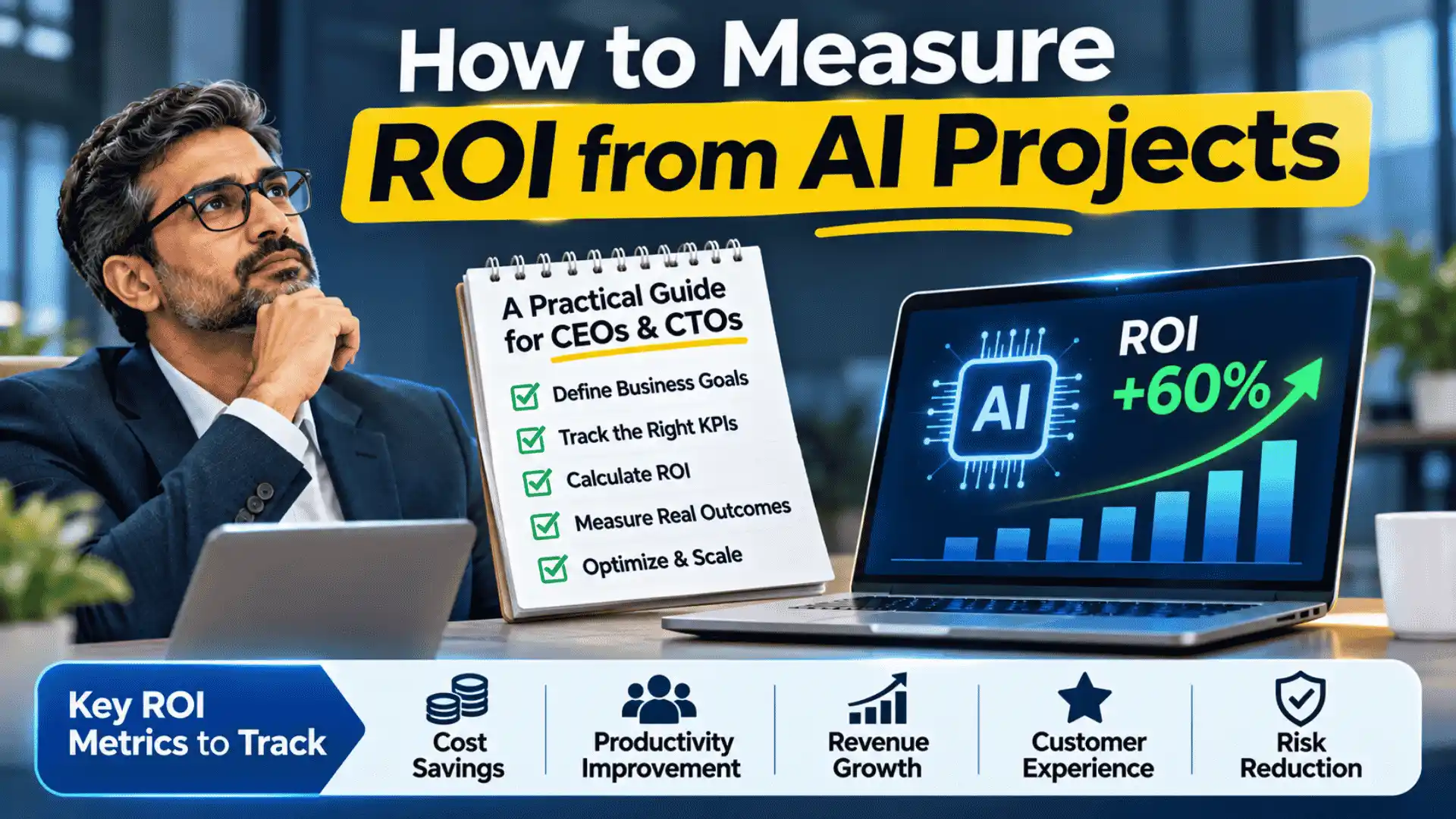
Measure Business Outcomes
Track metrics such as:
| KPI | Business Value |
|---|---|
| Hours Saved | Productivity |
| Cost Reduction | Operational Efficiency |
| Response Time | Customer Experience |
| Manual Tasks Eliminated | Automation Success |
| Employee Adoption Rate | AI Usage |
| Revenue Growth | Business Impact |
Train Every Department
Finance needs different AI use cases than HR.
Sales needs different automation than Operations.
One training session cannot serve everyone.
Continuously Improve
AI adoption isn't a one-time project.
Monitor usage.
Collect feedback.
Improve workflows.
Scale successful implementations.
Why Technology Alone Doesn't Create Transformation
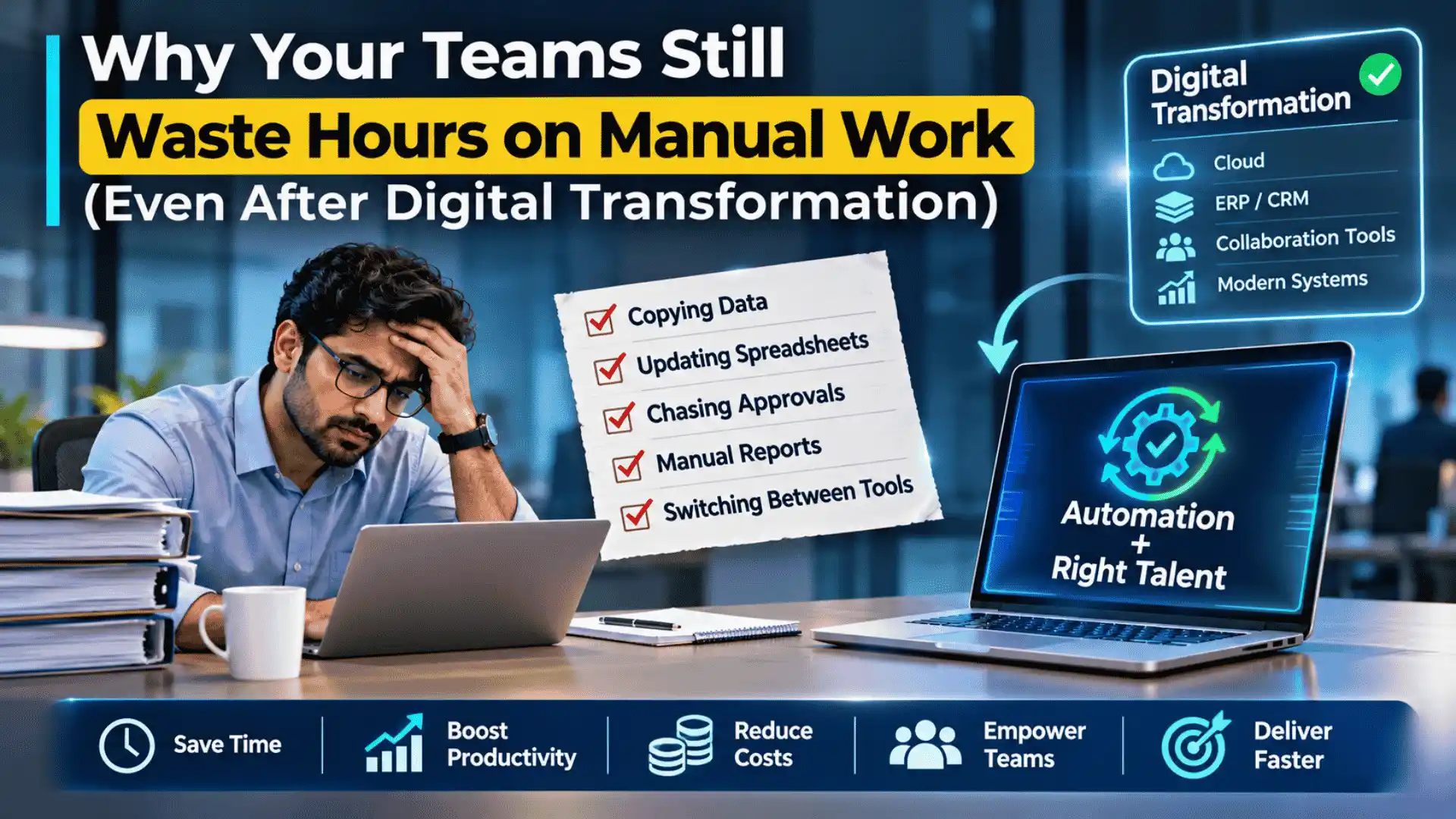
Many organizations believe digital transformation ends after purchasing software.
It doesn't.
Technology changes nothing unless people change how they work.
That's why organizations with identical AI tools often achieve completely different business results.
The difference isn't the software.
It's adoption.
How TeamBees Helps Enterprises Turn AI Into Daily Work
At Teambees, we help enterprises move beyond AI experimentation.
Our AI engineers, automation specialists, and IT staff augmentation teams work with organizations to:
- Identify high-impact automation opportunities
- Integrate AI into existing workflows
- Develop production-ready AI solutions
- Improve employee adoption
- Measure business outcomes and ROI
- Scale AI across departments
Instead of delivering AI that sits unused, we build AI solutions employees actually use every day.
Final Thoughts
AI tools are no longer the competitive advantage.
Using them effectively is.
The organizations that win over the next decade won't be the ones with the most AI licenses.
They'll be the ones whose employees use AI every single day to make faster decisions, eliminate repetitive work, improve customer experiences, and drive measurable business growth.
If your teams aren't using AI, the problem probably isn't the technology.
It's the adoption strategy.
FAQs
Why do employees stop using AI tools?
The most common reasons are poor training, unclear business value, workflow disruption, lack of leadership support, and fear of change.
How can companies improve AI adoption?
Focus on solving real business problems, integrate AI into existing workflows, provide department-specific training, and measure adoption with business KPIs.
Does buying more AI tools improve productivity?
No. Productivity improves only when employees consistently use AI to eliminate manual work and improve decision making.
What is the biggest mistake companies make with AI?
Many organizations invest in AI technology before defining business objectives, employee workflows, and success metrics, resulting in low adoption and poor ROI.