AI Staff Augmentation vs Hiring an In-House AI Team
Hiring AI talent is expensive and time consuming. This guide compares AI staff augmentation with building an in-house AI team, covering costs, hiring timelines, scalability, knowledge transfer, security, and ROI. Learn which model fits your business goals and how enterprises accelerate AI adoption while reducing delivery risk.
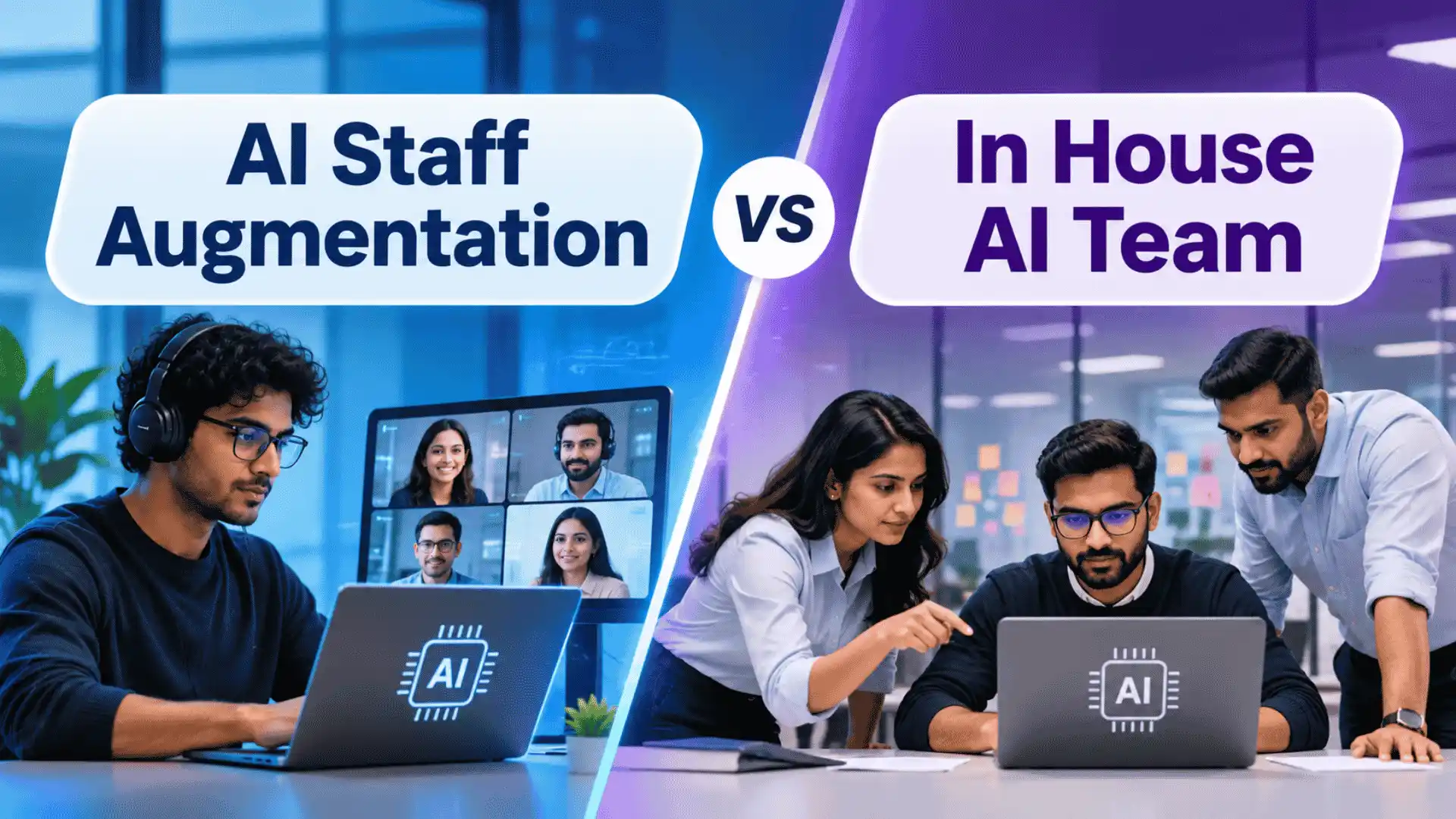
AI Staff Augmentation vs Hiring an In-House AI Team: Which is the Better Choice for Enterprise AI Success?
Enterprise AI is moving from experimentation to production, but one question continues to delay projects:
Should you hire an in-house AI team or use AI staff augmentation?
The answer depends on your business goals, timeline, budget, and existing technical capabilities.
Many organizations assume hiring a permanent AI team is the safest long-term investment. In reality, AI hiring is expensive, highly competitive, and often slower than the pace of business. AI staff augmentation gives enterprises immediate access to experienced AI engineers, solution architects, ML specialists, and LLM developers without waiting months to build a team.
According to McKinsey, organizations that redesign workflows and combine AI with the right operating model are far more likely to achieve measurable business value than those that simply add AI tools.
If your goal is to launch AI faster while reducing implementation risk, this guide will help you decide which hiring model fits your business.
Why Are Enterprises Struggling to Build AI Teams?
Demand for AI professionals has grown much faster than supply.
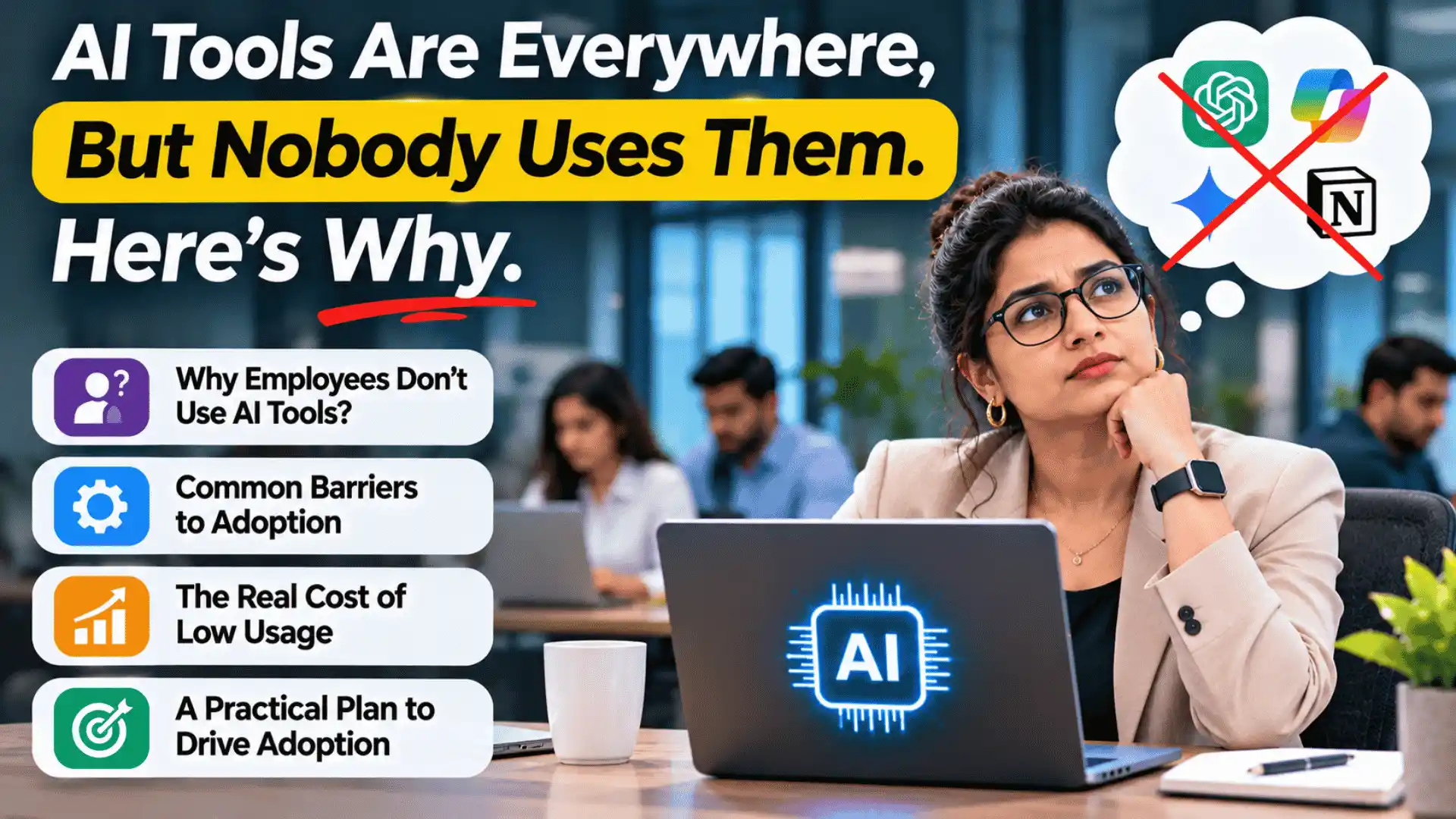
Recent industry research shows enterprises continue facing shortages in AI engineering, AI deployment, governance, MLOps, and LLM expertise. Skill shortages remain one of the biggest barriers to scaling AI successfully.
Some of the biggest hiring challenges include:
- High salaries for experienced AI engineers
- Long recruitment cycles
- Competition from large technology companies
- Difficulty retaining AI specialists
- Constant changes in AI technologies
Hiring one AI engineer does not build an AI capability.
Successful enterprise AI projects often require:
- AI Solution Architect
- Machine Learning Engineer
- LLM Engineer
- Data Engineer
- MLOps Engineer
- AI Product Manager
- Security & Governance Specialist
- Integration Engineer
Finding all of these people internally can take several months.
What Is AI Staff Augmentation?
AI staff augmentation allows companies to temporarily add experienced AI specialists to their existing engineering or technology teams.
Instead of spending months recruiting talent, businesses gain immediate access to specialists who have already built enterprise AI systems.
These experts can support projects involving:
Instead of replacing your internal team, augmented experts work alongside them.
AI Staff Augmentation vs Hiring an In-House AI Team
| Feature | AI Staff Augmentation | In-House AI Team |
|---|---|---|
| Hiring Speed | Days or weeks | 3 to 9 months |
| Initial Cost | Lower | High recruitment costs |
| Access to Specialists | Immediate | Limited by hiring market |
| Scalability | Easy | Slow |
| Flexibility | High | Low |
| Knowledge Transfer | Yes | Internal only |
| Long-Term Commitment | No | Yes |
| Project Risk | Lower | Higher during hiring phase |
When Does Hiring an In-House AI Team Make Sense?
Building an internal AI team works well when:
- AI is part of your long-term business strategy
- Multiple AI products will be developed internally
- Large engineering teams already exist
- AI becomes a core competitive advantage
- Long-term operational ownership is required
Examples include:
- AI-first SaaS companies
- AI product companies
- Large technology organizations
- Enterprise R&D teams
When Is AI Staff Augmentation the Better Choice?
Most enterprises are not building AI products.
They are solving business problems.
Examples include:
- Automating customer support
- Processing documents
- Supply chain optimization
- AI-powered analytics
- Internal copilots
- Knowledge assistants
- Intelligent workflow automation
These projects usually require experienced specialists for a limited period.
Staff augmentation helps companies:
- Launch projects faster
- Reduce hiring risk
- Control costs
- Fill skill gaps immediately
- Deliver production-ready AI solutions
Hidden Costs of Hiring an AI Team
Many companies only calculate salaries.
The actual hiring cost is much higher.
Consider expenses such as:
- Recruitment agency fees
- Interview time
- Employer branding
- Onboarding
- Training
- Software licenses
- Infrastructure
- Employee retention
- Continuous AI upskilling
AI changes rapidly.
New models, frameworks, security practices, and deployment methods evolve every few months.
Keeping an internal AI team fully updated requires continuous investment.
AI Projects Need More Than AI Engineers
Many AI projects fail because organizations focus only on hiring developers.
Successful enterprise AI also requires:
- Business stakeholders
- AI governance
- Security reviews
- Infrastructure planning
- Data quality
- Workflow redesign
- Change management
McKinsey research shows organizations generate more AI value when they redesign workflows instead of simply adding AI into existing processes.
Technology alone is rarely enough.
How AI Staff Augmentation Accelerates AI Adoption
Experienced AI specialists have already solved problems such as:
- LLM optimization
- Prompt engineering
- AI security
- Vector databases
- Agent orchestration
- Production monitoring
- API integrations
- Enterprise deployments
Instead of learning through trial and error, your team benefits from proven experience.
This reduces implementation risk while improving delivery speed.
Should You Build AI Internally or Partner with Experts?
Many successful enterprises use a hybrid approach.
Typical roadmap:
- Start with external AI specialists.
- Launch production systems faster.
- Train internal employees.
- Transfer knowledge.
- Build internal capability over time.
This approach combines speed with long-term sustainability.
Gartner advises CIOs to redesign work and use automation strategically before expanding headcount broadly, particularly given ongoing shortages of technical AI talent.
Questions Every CTO Should Ask Before Hiring
Before deciding, ask:
- Is this a one-time project or a long-term AI program?
- How quickly do we need results?
- Can we recruit experienced AI specialists?
- Who will maintain AI systems?
- What happens if key AI employees leave?
- How will we scale AI across departments?
- Do we have governance and security processes?
These questions often determine whether staff augmentation or permanent hiring delivers better business outcomes.
How TeamBees Helps Enterprises Scale AI Faster
At TeamBees, we help enterprises accelerate AI adoption without waiting months to build internal AI teams.
Our specialists support projects involving:
- AI Agents
- Generative AI
- LLM Development
- AI Automation
- AI Integration
- AI Consulting
Whether you need one AI engineer or a complete AI delivery team, we help you move from strategy to production faster while working alongside your existing technology teams.
Final Thoughts
There is no universal answer to AI Staff Augmentation vs Hiring an In-House AI Team.
If AI is your company's primary product, investing in an internal team often makes sense.
If your goal is to automate operations, improve productivity, deploy AI faster, or reduce project risk, AI staff augmentation is usually the more practical and cost-effective option.
The most successful enterprises focus less on how talent is acquired and more on how quickly AI delivers measurable business value. In today's market, combining experienced AI specialists with your existing teams is often the fastest path from pilot to production.