AI Integration Challenges Every Enterprise Should Know
AI integration can improve enterprise operations, but challenges like legacy systems, poor data quality, security, scalability, and user adoption often delay success. Learn the most common AI integration challenges and practical strategies to connect AI with existing business systems while reducing risk and improving long-term business value.
AI Integration Challenges Every Enterprise Should Know
Many enterprises invest in AI to improve efficiency, automate business processes, and support better decision-making. However, integrating AI into existing business systems is often more difficult than expected. Legacy applications, poor data quality, security concerns, and complex integrations can delay projects and increase costs. Understanding these challenges helps organizations build a successful AI integration strategy.
What is AI integration?
AI integration is the process of connecting AI capabilities with existing business applications, databases, cloud platforms, and enterprise software.
Examples include:
- CRM integration
- ERP integration
- Customer support systems
- HR platforms
- Finance applications
- Business intelligence tools
- Enterprise APIs
- Document management systems
The goal is to improve business processes without replacing existing systems.
Organizations can accelerate AI adoption with AI Integration Services that connect AI with enterprise applications.
Why is AI integration difficult?
Most enterprises already use dozens of business applications.
Adding AI requires these systems to communicate securely while maintaining performance, accuracy, and compliance.
Common challenges include:
- Legacy software
- Different data formats
- Multiple APIs
- Security requirements
- Business process complexity
- Integration across departments
Without proper planning, AI projects often fail before delivering business value.
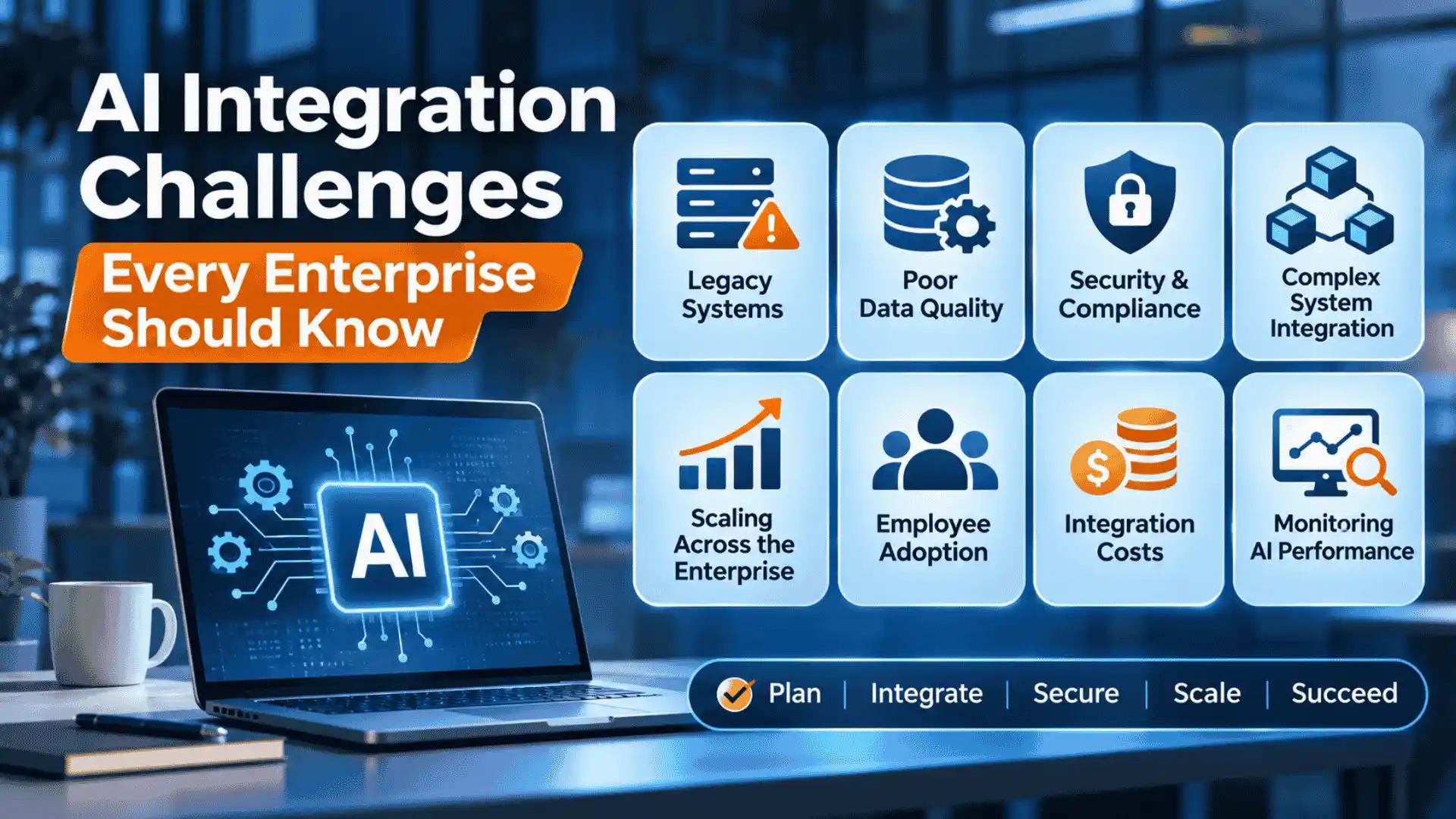
1. Legacy systems are difficult to connect
Many enterprise applications were not designed for modern AI solutions.
Organizations often face:
- Outdated software
- Limited APIs
- Manual workflows
- Slow performance
- Compatibility issues
Modern integration strategies help extend existing systems instead of replacing them.
2. Poor data quality
AI performs only as well as the data it receives.
Common data problems include:
- Duplicate records
- Missing information
- Inconsistent formats
- Outdated databases
- Poor data governance
Cleaning enterprise data should be one of the first steps before implementing AI.
3. Security and compliance
Enterprise AI solutions often access sensitive business information.
Organizations should implement:
- Secure authentication
- Role-based access
- Data encryption
- Audit logs
- API security
- Compliance monitoring
Security should be considered from the beginning of every AI integration project.
4. Connecting multiple business applications
Many organizations use different platforms for sales, finance, HR, operations, and customer service.
Successful AI integration requires these systems to exchange information securely and in real time.
Experienced AI Consulting Services and AI Integration Services help reduce integration complexity.
5. Scaling AI across the enterprise
Many organizations begin with a successful pilot but struggle to expand AI across departments.
Common challenges include:
- Different business processes
- Multiple technology platforms
- Growing infrastructure needs
- Performance bottlenecks
- Managing multiple AI models
Building scalable architecture from the beginning makes future expansion easier.
6. Employee adoption
AI integration changes how employees work every day.
Without proper training, organizations may experience:
- Low user adoption
- Resistance to change
- Manual workarounds
- Reduced productivity
- Poor return on investment
Successful AI projects include user training and clear change management plans.
7. Integration costs
AI integration involves more than deploying an AI model.
Typical project costs include:
- API development
- System integration
- Data preparation
- Cloud infrastructure
- Security implementation
- Testing
- Ongoing maintenance
A phased implementation approach helps enterprises manage budgets while delivering measurable business value.
8. Monitoring AI performance
After deployment, AI systems require continuous monitoring.
Organizations should regularly measure:
- Response accuracy
- System performance
- User adoption
- API health
- Business outcomes
- Security events
Continuous improvement ensures AI continues delivering value as business needs evolve.
Best practices for successful AI integration
Enterprises can improve project success by following these practices:
- Start with a clear business objective.
- Prepare and clean enterprise data.
- Integrate AI gradually instead of replacing existing systems.
- Build secure APIs and access controls.
- Test integrations before deployment.
- Monitor performance continuously.
- Work with experienced AI integration teams.
How TeamBees helps enterprises integrate AI
TeamBees helps enterprises connect AI with existing business systems while minimizing disruption.
Our expertise includes:
We also help enterprises scale delivery through Dedicated Development Teams and Staff Augmentation.
Frequently Asked Questions
What is AI integration?
AI integration is the process of connecting AI with existing business applications such as CRM, ERP, HR, finance, customer support, and enterprise databases to improve business operations and automate workflows.
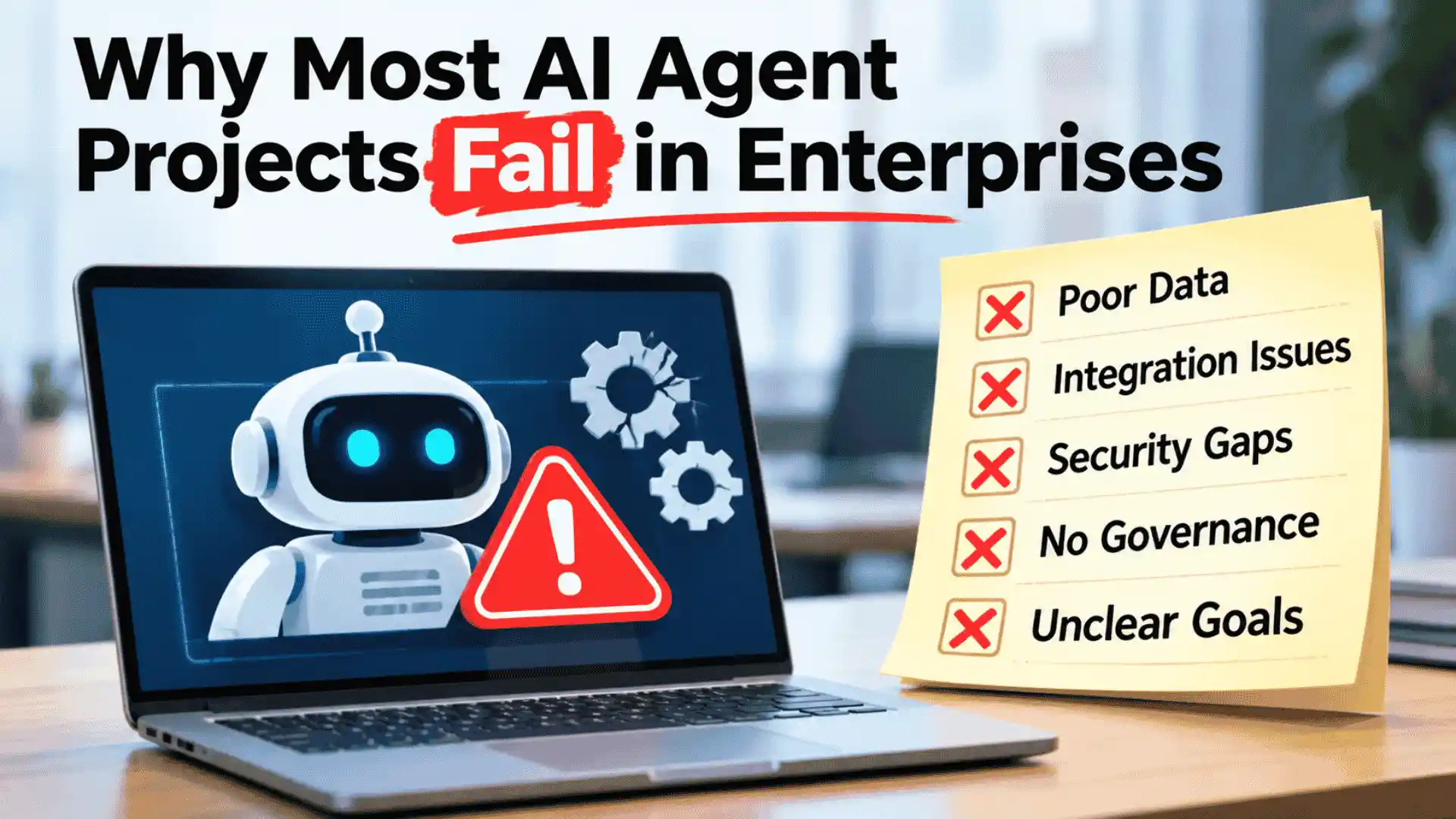
Why do AI integration projects fail?
Many AI projects fail because organizations focus on technology instead of business problems.
Common reasons include:
- Poor data quality
- Legacy systems
- Weak integration planning
- Security concerns
- Lack of user adoption
- Unclear business goals
- Limited scalability
Planning the integration before selecting AI tools significantly improves project success.
Can AI work with existing enterprise software?
Yes.
Modern AI solutions can integrate with existing enterprise applications through APIs, cloud services, databases, and middleware. In many cases, businesses can improve their current systems without replacing them.
How long does AI integration take?
The timeline depends on the number of systems involved and the complexity of the project.
A small integration may take a few weeks, while enterprise-wide AI integration across multiple departments can take several months.
Many organizations implement AI in phases to reduce business disruption.
Which departments benefit the most?
AI integration can improve operations across many business functions, including:
- Customer Service
- Sales
- Marketing
- Human Resources
- Finance
- Operations
- Supply Chain
- IT Support
The best results come from automating repetitive work and improving decision-making.
Common AI integration mistakes
Many enterprises delay AI success because of avoidable mistakes.
Some of the most common include:
- Implementing AI without clear business goals
- Ignoring data quality
- Replacing existing systems instead of integrating them
- Underestimating security requirements
- Skipping employee training
- Failing to monitor AI performance
- Trying to automate every process at once
A phased implementation strategy delivers better long-term results.
Why choose TeamBees for AI integration?
TeamBees helps enterprises integrate AI into existing business systems while maintaining security, scalability, and business continuity.
Our expertise includes:
We also support enterprise delivery through:
Final thoughts
AI integration is not about adding another tool to your business. It is about connecting AI with your existing systems to improve efficiency, automate processes, and support better business decisions.
Organizations that focus on business objectives, prepare their data, build secure integrations, and scale gradually are more likely to achieve long-term success.
With the right strategy and technology partner, AI integration can deliver measurable value across the enterprise.